
Students take on Equinox challenge
A team of students participating in the most recent Oxford Strategy Challenge (TOSCA), took on an Equinox-related challenge set by the River Learning Trust.
TOSCA is an intensive, week-long programme that brings Oxford University students and diverse organisations together to tackle real strategic challenges. Working in small, diverse teams, participants act as consultants, analysing a client organisation brief, collaborating directly with the organisation, and delivering practical, evidence-based recommendations.
For organisations, it offers fresh perspectives on real business questions, structured insight delivered at pace, and the opportunity to engage with highly motivated students while contributing to their skills development.
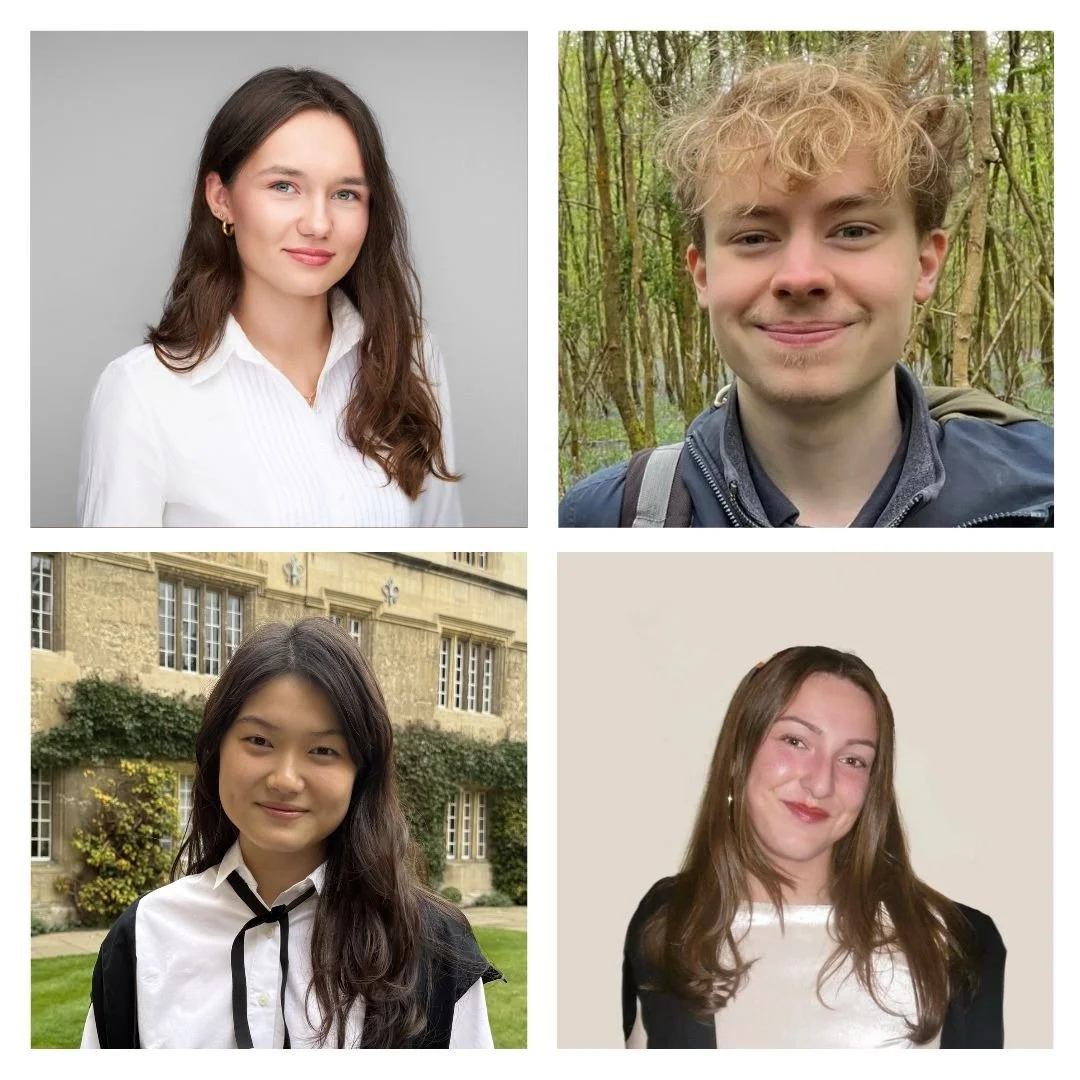
Emily Lamont, Gustė Domskytė, Ran Duan, Ndinshae Furamera and Will Withers spoke to Equinox about their experience.
“Our team consisted of five students at the University of Oxford, from a variety of colleges and year groups. We all studied different subjects: Biology, Geography, History and Politics, Philosophy, and Economics. This diversity was valuable throughout the project, as it allowed us to approach the task from various academic, social, and ethical perspectives. We individually applied to TOSCA for many of the same reasons - to gain hands-on consultancy experience, and develop our research skills, while aiming to create a positive impact.
After guided introductions and workshops led by the Oxford Careers Service, our team was presented with a client brief about River Learning Trust (RLT), a multi-academy trust responsible for 30 secondary and primary schools in Oxfordshire and Swindon. Our task was to consider how Equinox could unite local businesses, schools, universities, and community groups to support young people’s transition into employment in the Blackbird Leys ward of Oxford. RLT emphasised the need to target the intersecting issues of economic deprivation and low aspiration, while focusing particularly on STEM areas, to reflect the identified skills shortages in Oxfordshire.
We started by delegating different sub-sections among ourselves, in line with our existing strengths and interests. This allowed us to work independently, while still regularly sharing insights with each other. We had daily team meetings to check that we were all on the same page, and three meetings with RLT – a preliminary briefing, a catch up, and then our final presentation. Shared documents were the sites of our constant brainstorms, analyses, and research findings. The intensive nature of the project meant that this process developed rapidly, allowing us to establish a strong team dynamic and execute our work efficiently.
We all found the challenge engaging, especially because the research that we were doing felt local and socially meaningful, with a potential for real impact. We enjoyed that we were working towards long-term, practical solutions, instead of quick fixes or abstract theories. The open-ended nature of the brief encouraged us to think critically about how different factors interacted, rather than focusing on a single policy intervention. As university students, it can be easy to have a rather narrow view of Oxford, restricted to the areas in which we live our day-to-day lives, and forget that Oxford is also an increasingly unequal city.
It was an incredibly valuable experience for all of us to be able to increase our knowledge of Oxford, particularly in understanding how deprivation and limited opportunity persist alongside the city’s reputation for academic excellence and prosperity. We learnt a lot throughout the challenge, including the fundamentals of consultancy, such as structuring a business-style proposal, conducting stakeholder and SWOT analyses, and communicating clearly with a client. The experience as a whole was highly rewarding, and we were pleased that RLT and Equinox valued our insights and were keen to engage further.”
Benedicte Yue from RLT commented: “As a group of schools in Oxfordshire, we set this brief because Multi-Academy Trusts increasingly act as "anchor institutions". Schools are vital community convenors with long-term relationships with families and the post-pandemic landscape has seen a sharp rise in youth disengagement. The educational success is often hindered by "self-perpetuating" systemic issues that exist "beyond the school gate". This challenge is most visible in Blackbird Leys, a priority area in Oxford—which is the second most unequal city in England. Families and young people in Blackbird Leys can sometimes feel alienated from Oxford’s global success.
We asked students to explore how Equinox can effectively combine the power of local businesses, universities, and community groups to identify pathways into high-growth sectors where local residents are currently underrepresented and create a robust, long-term support system that signposts available help and opportunities.
We chose the Oxford Strategy Challenge because we needed a fresh, diverse "student voice" to challenge our assumptions and propose solutions that are relatable, co-designed, and sustainable for the long term. The student team provided ambitious, realistic recommendations rooted in a genuine understanding of the local context. “