
Growth - what’s next?
Public Affairs Manager, Callum Coleman, provides his thoughts on the discussions at the National Growth Debate.
I spent Tuesday 21 April at the National Growth Debate. The event, organised by the Good Growth Foundation, boasted a bafflingly good line-up of ministers and mayors. Half of my LinkedIn feed dutifully scrambled for tickets to this year’s Coachella for Policy Wonks.
Headlines were made before we all arrived at the IoD on a sunny April morning. Ed Miliband and Rachel Reeves used the event for some - potentially misleading? - policy announcements on decoupling gas and electricity prices. And, more interestingly, two prominent Labour backbenchers joined together for an op-ed in The Times, prompting murmurs of a backbench plot.
On this occasion, the crux of the scandal seemed to be that Louise Haigh and Chris Curtis would actually like to do something with Labour’s landslide majority. Here’s to hoping that this reminds the party leadership that they actually do have a healthy majority! Curtis and Haigh’s intervention - and the speeches they made on the first panel of the morning - set the tone for my prevailing takeaway from the day: Everyone seems to agree, so why isn’t more happening?
Almost everyone is singing from the same hymn sheet right now. The government endlessly talk about their growth mission, diagnosing our malaise in the same terms as everyone else: chronic short-termism has wrecked our economy, we need to attract more investment, cut spending, bolster our lacklustre infrastructure, and reform the economic and governance structures of state that are systematically failing.
Speech after speech recognised these issues. They all hit the same themes: more fiscal devolution, freeing up more capital investment in British business, tackling the underlying systemic issues in the economy, and making it easier and cheaper to get things built here. The government have even made clear commitments to that end. Agreeing to implement the Fingleton Review across the whole of the British economy seemed a huge step forward for tackling the systemic barriers to growth.
So, why does it feel as though we’re still having the same conversations? Why aren’t more homes being built, why are we still spending millions on environmental assessments for projects that are never built? Or, to use an example Octopus CEO Greg Jackson gave on Tuesday, why does a Chinese company quote three months to install a wind turbine in China vs six years in the UK?
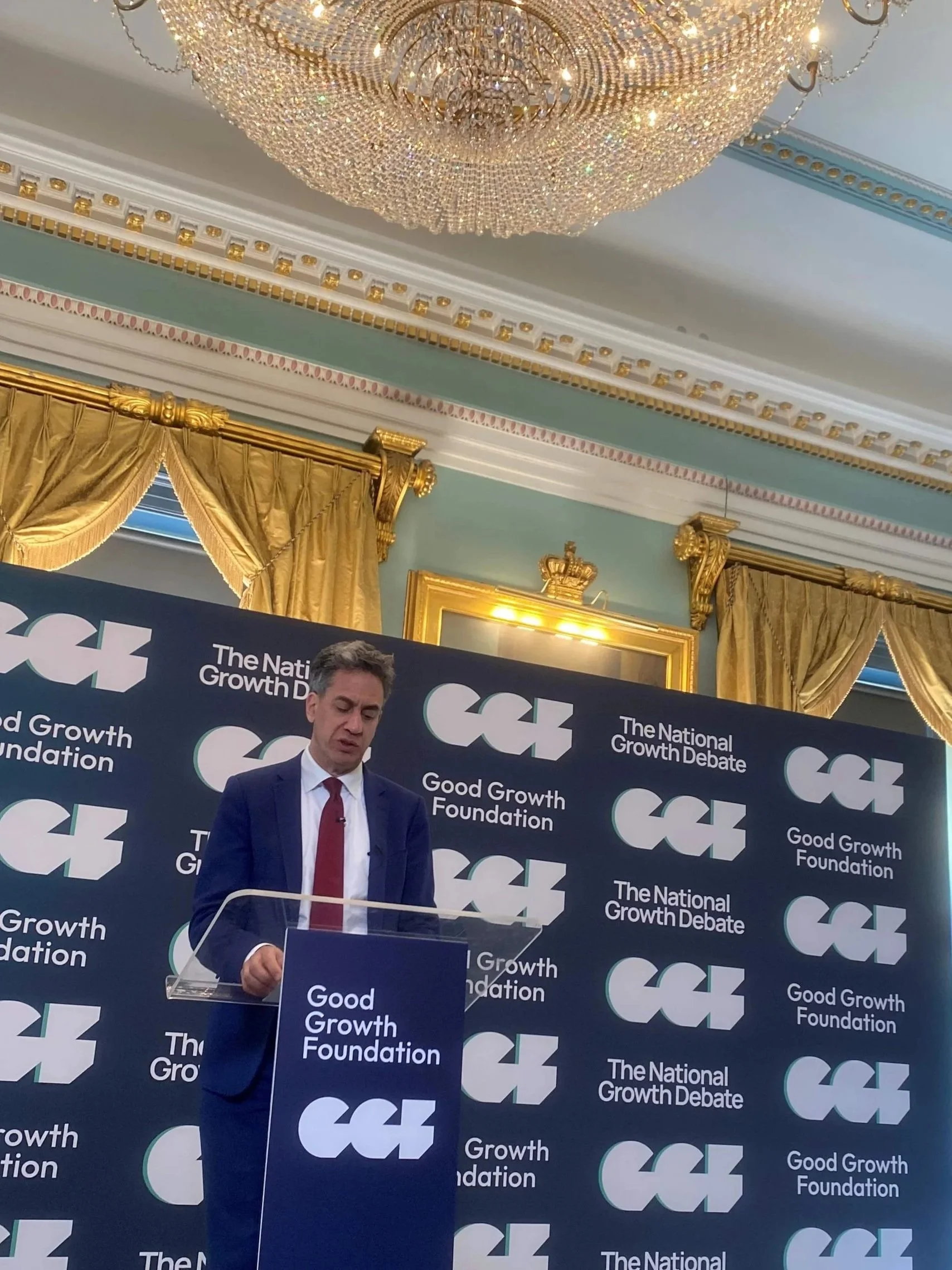
And, crucially, the people putting forward these critiques at the National Growth Debate - and throughout this parliament - are the exact people who would seem to have the power to do something about it. So, why aren’t they?
Darren Jones’ remarks were perhaps the most characteristic of all this. Between a grilling from Anne McElvoy, Politico’s Executive Editor, the Chief Secretary to the Prime Minister called for civil service reform and systemic change to the economy. Reforming the civil service is as clear an open goal as a minister could wish for, so why doesn’t he just do it?
I left the National Growth Debate reassured by the agreement on both the diagnosis and prescription for fixing our economic malaise. But I also left wondering, why isn’t more being done to treat it?
Unless we stray towards a deep-state explanation a la Dom Cummings, I genuinely don’t know. I would love to hear any ideas. At Equinox, we're working to fix that in Oxfordshire - starting with calling for the fiscal tools our city needs to compete on the global stage.
The views expressed here are those of the author and do not necessarily reflect those of Equinox or its partners