
Innovation for good - tackling women’s health inequalities
On International Women’s Day we look at how organisations across the Equinox ecosystem are coming together to address women’s health inequalities.
Innovation for good is a key part of the Equinox vision. In February, Dr Dorota Nawrot, a member of the Equinox team, joined more than 70 delegates at the Thames Valley Chamber of Commerce (TVCC) Health and Life Sciences Working Group (HLSWG) to explore how innovation can help address inequalities in women’s health.
The group, chaired by Sue Staunton, Managing Partner and Head of Life Sciences at James Cowper Kreston, and sponsored by Green Park, brings together representatives from industry, academia, SMEs, NHS trusts, professional bodies and government.
The statistics presented at the event were stark:
Women spend 25% more of their lives in poor health compared with men.
Only 5% of global research funding is directed towards women’s health.
There are currently 600,000 women on gynaecology waiting lists, the fastest-growing backlog in the NHS.
Closing this health gap could deliver £32 billion to the UK economy each year.
Every £1 invested in women’s health returns an estimated £11 to the economy.
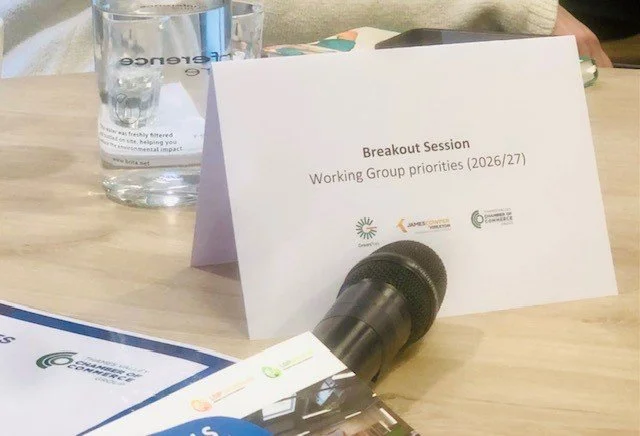
Delegates discussed the challenges these figures represent, the impact on society and the economy, the urgency in addressing these gaps, and how innovative solutions can be progressed to deliver meaningful change.
Sue Staunton said, “Our working group is deliberately action-led and business-driven. Women’s health is one of several priorities where the Thames Valley has the capability to lead, showcase good practice and drive collaborative, commercially driven, solutions that can support the delivery of the ambition government has set-out in its NHS 10-Year Plan. The HLSWG is speaking for the region’s life sciences business community. We have a proven track record and a growing reputation, lobbying government to champion improved patient care and outcomes; and driving policy reform”
Gareth Ralphs, Head of Business Representation and Policy, TVCC added “It is evident that industry, practitioners and academics recognise that addressing inequalities in Women’s Health is a significant challenge, but one that demands a collective action and long-term commitment from the HLSWG – we stand mobilised and ready”.
For Equinox, this work reflects a clear commitment to equitable innovation that delivers tangible benefits. Several organisations who are Equinox Charter signatories are represented on the working group, reinforcing the importance of collaboration in delivering Innovation for Good; which, in this case, will lead to meaningful sustainable change for women’s health.
Find out more about the Thames Valley Chamber of Commerce Health and Life Sciences Working Group